Beliefs of a 21st Century Unitarian

Thursday, 31 July 2014

The Sovereign Importance of Compassion

The Sovereign Importance of  Compassion

The Golden Rule lies at the heart of all religions. Imagine what the world would be like if everyone followed it! If every person genuinely tried to behave to the rest of humankind with a concern and care for how they would feel. As it says in the Charter for Compassion:

“Compassion impels us to work tirelessly to alleviate the suffering of our fellow creature, to dethrone ourselves from the centre of our world and put another there, and to honour the inviolable sanctity of every single human being, treating everybody, without exception, with absolute justice, equity and respect.” 
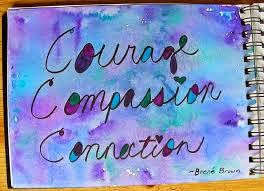

 For me, increasingly, the central importance of the Golden Rule is at the heart of my own system of thought and belief, my own theology. Whether we follow the positive imperative of Jesus: “Do to others whatever you would have them do to you.”, or the negative imperative of Confucius: “What you do not want done to you, do not do to others”, the message is the same.

The Charter for Compassion invites us to “restore compassion to the centre of morality and religion, to return to the ancient principle that any interpretation of scripture that breeds violence, hatred or disdain is illegitimate, to ensure that youth are given accurate and respectful information about other traditions, religions and cultures, to encourage a positive appreciation of cultural and religious diversity, to cultivate an informed empathy with the suffering of all human beings—even those regarded as enemies.”

If we want to make our religion more compassionate, it is we that have to do it - we who have to be the change we want to see in the world. We have to take responsibility for our own traditions. It is no good waiting for "them" to do something - even if "them" is the General Assembly of Unitarian and Free Christian Churches, which is a partner organisation of the Charter for Compassion. It is us, the individual congregations, the individual people in those congregations, who need to take responsibility ourselves - to become activists *where we are*. We need to work hard, to think outside the box, to grapple with difficulties. There are no simple blanket solutions.

If we are to embrace the Golden Rule, we need to start here, where we are. Let us ask ourselves the questions
  • Have I shown mutual respect and goodwill to my friends and neighbours?
  • Have I practiced constructive tolerance and openness towards the sincerely-held beliefs of others?
  • Am I doing as I would be done by?
  • Am I doing my best to avoid giving pain to others?
 As Unitarians, there are things that we can all do to bring compassion into the heart of our denomination, from the small acts of kindness we do to each other and in the wider world, to supporting social justice issues that promote tolerance, inclusivity, and peace. And supporting them by doing something practical, not just giving a donation and forgetting about it. We can set up engagement groups to discuss Armstrong’s book Twelve Steps to a Compassionate Life; we can preach about compassion from the pulpit, and most importantly, we can strive to follow the Golden Rule ourselves, and lead by example. If we can encourage and support our congregations to do the same, I do believe that we could make a real difference to the world we live in, for the better. 

Sunday, 27 July 2014

Learning from Others

One of the lovely things about being a Unitarian is that we can respect the spiritual and religious journeys of members of many religious traditions, and also receive inspiration from them. Because of the undogmatic nature of Unitarianism, we believe that all human beings are spiritual beings; and all are able to have a relationship with the Divine Other, which some may call God, some Allah, some Brahma, some Lord, some Spirit of Life, some Ultimate Reality - the list goes on.


The changing nature of the beliefs and values of Unitarians, particularly over the last half century or so,  has been detailed in Vernon Marshall's book The Larger View: Unitarians and World Religions, which I commend to you as a fascinating read. In it he writes: "modern Unitarianism in Britain is a movement that is based on principles, rather than on theology. It acknowledges its origins in liberal Christianity, and respects them, but now affirms the right of its individual members to find their own religious position."

Of course this includes finding inspiration from the writings and teachings of other religious traditions, both Christian and non-Christian. Many people within our movement today are attracted to (among others) Buddhism, Taoism, Paganism and Sufism. I find particular inspiration from Quaker writings and wisdom, from Taoism, and from the poetry of Hafiz and Rumi.

This interest is not just confined to private study; readings in Unitarian worship services will often include something from another religious tradition, because the worship leader finds that it is the most appropriate way of saying what they want to say. And other elements from many different religious traditions have crept into Unitarian worship - meditation, the use of some Pagan rituals, Dances of Universal Peace, Taizé chanting and so on.

This has added immeasurably to the richness and variety of Unitarian worship. And Unitarians are also much involved in inter-faith work: the World Congress of Faiths and the International Association for Religious Freedom both have prominent Unitarian members, and many congregations and ministers are involved in inter-faith work at a local level, working with adherents of other religions to foster compassion and tolerance where they are.

It is my firm belief that learning about and engaging with other religious traditions is an important part of the practice of compassion, so that we may understand others' spiritual and religious practices, rather than fearing them. This will have the dual effect of deepening our own Unitarian faith and practice, and also of enabling us to stand up for inter-religious tolerance, compassion and understanding, in our conflicted world.


Wednesday, 16 July 2014

The Bible and Unitarians

When I started the Worship Studies Course (a training course for Unitarian lay preachers), my knowledge of the Bible was very superficial - I knew most of the dear old stories that we learn at our mothers' knees, and was reasonably familiar with the four canonical Gospels. And I knew that an awful lot of good advice was squirreled away in it - advice by which countless Jews and Christians had live their lives. But my knowledge of the Hebrew Bible was, as I say, limited to the famous stories - Daniel in the Lion's Den; Moses and the Ten Commandments; Joseph and his Coat of Many Colours and so on - you can fill in the rest.


At the beginning of the Biblical Studies module, I realised that I was going to have to do quite a bit of reading. What I hadn't realised was how fascinating I was going to find it - there is just so much in the Bible. To know it well must be a life's study. My first shock was how readable a modern version can be - I have a New Revised Standard Version. My second shock was how much I didn't know - for example, in the famous story of David and Goliath, I had never appreciated that the stone David threw only stunned Goliath, and he finished him off by cutting his head off!

This exciting experience of revelation and discovery must be like that experienced by people in the 16th century CE when the first Bibles became widely available in English, due to the spread of printing (up until then, the Church had made sure that they were only written in Latin and Greek, and were hence 'closed books' to all but the highly-educated. Before these brave pioneers (William Tyndale in 1526 and Miles Coverdale in 1535) published their translations of the New Testament and the entire Bible, only those with Latin or Greek (in effect the clergy) could read the Bible, and ordinary people had to believe what they were told.Why do I say "brave pioneers"? Well, the Church was desperately afraid that if people could read the Bible for themselves, they might distort or misinterpret its message (thinking for themselves, shock, horror!). So Tyndale was burned at the stake for heresy.

Then, following the English Reformation in the 1530s, King Henry VIII ordered that copies of a new translation, The Great Bible, be placed in every church, in 1539. This was the first "authorised version" of the Bible in English. The revolution had begun. After a brief period of suppression during Queen Mary's reign, bishops of the Church of England produced The Bishops' Bible in 1568, which was followed most famously by The King James Bible in 1611, which is now known as The Authorised Version. Although there have been many other translations since, the Authorised Version is certainly the edition that has influenced so much of English literature, and the edition whose language most people are most familiar with.

The printing press enabled more books to be published in the vernacular, which in turn led to a sort of virtuous circle: the more books that were available, the more people were likely to be able to learn to read, and hence educate themselves. Unitarianism is a most unusual faith, in that it evolved simultaneously in many countries at about the same time. People in many lands were studying their Bibles, and, finding no evidence for the doctrine of the Trinity (which had been accepted as Christian doctrine at the Council of Nicaea in 325 CE and further confirmed at the Council of Constantinople in 381 CE). So they rejected it, going back to their Bibles to find out what the earliest Christians had believed.

It is worth realising that our progressive, questioning faith is built upon the blood of some brave men, who died in defence of their beliefs that the doctrine of the Trinity was a mistake - for example, Michael Servetus in 1553 (who was burnt at the stake in Geneva under the influence of John Calvin); Francis David, the pioneer of Unitarianism in Transylvania, who insisted that prayer could only be offered to God and not through Jesus, and who died in prison in 1579; and our own John Biddle, who died of a disease caught while in prison for his beliefs, in 1662.

So the Bible had a vital role to play in Unitarian thinking and history, from the denomination's earliest days. Today, the Bible is one of the many sources of wisdom available to us, and used by us in our spiritual quests. Cliff Reed puts it like this in Unitarian? What's That? "Unitarians see the Bible as the record of a people's long struggle to understand themselves, their world and their God. In it the writers describe and interpret the spiritual dimension of their existence and their history ... Where we find in scripture a source of sustaining and abiding truth, it can be said to be a source of divine wisdom."


Thursday, 10 July 2014

Sacred Words

This quotation from Stephen Lingwood's The Unitarian Life summarises neatly the Unitarian attitude to sacred texts:
"We can pay attention to a cloud of witnesses from many different countries around the world and many different times in history. We can delve deep into the traditions of our spiritual ancestors and listen to their voices. In doing so, we can create a 'living scripture': a loose, dynamic collection of texts which bring together essential insights from the past and present of our movement."

In our worship and our devotions, we are not limited to readings from a particular sacred text - we are free to create our own 'living scripture' of readings that will speak to our condition and that of our congregations. 

Der lesende Klosterschuler - the reading monk
Every Unitarian will have different books which inspire them, which speak to their condition and influence their lives. The Bible used to be our primary source of inspiration and revelation, and for some Unitarians, it still is. But times have also moved on. At a recent conference of the Ministerial Old Students' Association at Harris Manchester College, Oxford, Sister Benedicta Ward, Supernumerary Fellow & Dean of Degrees at the College and a member of the Anglican religious community of the Sisters of the Love of God, led a session on Devotional Literature, which she described as "written words that help us give ourselves over to the Divine."

She had asked those present to bring a book with them, which had helped in their own spiritual journeys. The choices (from current, retired and aspiring Unitarian ministers) were fascinating:
  • The Benedictine Rule
  • The works of UU minister Forest Church
  • A Year of Grace, compiled by Victor Gollancz
  • Love Poems From God: Twelve Sacred Voices from East and West
  • The Great Companions
  • Writings by Julian of Norwich
  • The prayers of James Martineau and Harry Lismer Short
  • Guide to Walking Meditation by Thich Nhat Hanh
  • In the Holy Quiet of This Hour by Richard S. Gilbert
  • Poetry by R.S. Thomas
  • The Psalms
  • The Sacred Space -scriptural readings & reflections on them by Irish Jesuits
  • Quaker Advices and Queries
  • The works of Henri Nouwen
  • The Shaking of the Foundations by Paul Tillich
  • New Seeds of Contemplation by Thomas Merton
  • On Praying the Psalms by Dietrich Bonhoeffer
  • The Language of the Heart by A. Powell Davies
Quite a mixed selection. Many of the titles put forward "rang bells" with other folk. Sr. Benedicta explained that devotional reading was a very different exercise from reading to analyse and dissect a text. The important thing is to be still and to learn to listen to what the Divine is telling you through the medium of the text. This approach may be too mystical for many Unitarians, but most of the ministers present seemed to resonate with it.


Wednesday, 18 June 2014

Enoughness

The title of this blogpost is taken from John Naish's book Enough. His argument is that not only do we have everything we could possibly need, but also that by always chasing after more, we are wrecking the planet for everyone else (not to mention future generations), AND not being any happier and fulfilled ourselves. He warns that if we don’t appreciate this fact, the cycle of manufacturing and consuming ever ‘more’ of everything  “will continue until the planet is only fit for cockroaches.” 


One of the worst things that the affluent West is doing is producing dangerous greenhouse gas emissions that cause global warming and climate change. And the irony is, although we (the developed world) are the major “sinners” in this respect, it is in the developing world that the worst impacts are felt – through drought, flooding, and other natural disasters such as tsunamis.

So what can we, as concerned individuals, do? It isn’t enough just to put the papers and bottles into a recycling box once a week, or to buy organic vegetables. To really make a difference, enough of us need to make fundamental changes to our lifestyles.

I think the time is drawing near when we can no longer put our heads in the sand. Not if we want to live with ourselves. Not if we want a healthy planet for our children and grandchildren to live on. Not if we truly believe that exploitation and slavery are wrong. Perhaps it is time for us to take responsibility for the choices we make, and to buy only fair-traded food, and ethically produced clothing.  If enough of us “voted with our feet” by no longer buying goods that are the results of exploitation, maybe things would change. Maybe.

All these things are fine and practical. But I agree with John Naish when he says that the changes we need to make are more fundamental. We really do need to adopt his doctrine of enoughism and realise that we already have everything we need. We need to educate ourselves out of the consumerist treadmill that our primitive brains have hot-wired us into, and realise that we actually don’t need to buy the latest gadget, the newest fashion item, the fastest car, in order to be contented and fulfilled in our lives. We need to wean ourselves off the dependency on material goods to provide happiness, because he’s right – they don’t. We need to  examine our lives with enoughism in mind, and ask ourselves some important questions, like:

·         What optimum level of information do I need to thrive?
·         How many technological gadgets do I actually need, as opposed to desire?
·         Do I really savour the food I eat? Or do I gollop it down quickly without tasting it?
·         Do I truly need this new outfit / mobile phone / slow cooker, rather than just want it?
·         Has my desire for this thing been implanted by marketing techniques?
·         Is there anything I already own that I could substitute for it?
·         If I’m replacing something I’ve already got, what’s really wrong with the old one?
·         Have I got my work/life balance right?
·         Do I spend my leisure time doing the things I love?
·         What do I truly value?

Reading Naish’s book has really made me realise how badly we are messing up the planet, with our insatiable demands for more of everything. To pay for our Western affluence, 80% of the world’s population lives in sub-standard housing, and 50% suffer from malnutrition. Our selfish ways mean that global warming is spiralling out of control, with fateful consequences for our world. It is time to say STOP, re-evaluate our lives and try to un-do some of the harm we have done.


Thursday, 12 June 2014

Sacred Living

Christians have sacraments, which Augustine defined as "the visible form of an invisible grace." Protestants have two: baptism and the Lord's Supper or communion; Roman Catholics have an additional five: confirmation, confession (or penance), marriage, ordination and extreme unction or last rites (although I understand that this last can now be done if the person is ill rather than dying). My Baptist lecturer at Regent's Park College, Myra Blyth, stated that "they point to and reveal the creating, redeeming grace of God through their association with the life, death and resurrection of Jesus ... They are an extension of Christ's ministry in and to the world."


But as I have stated elsewhere on this blog, I would rather believe with the Christian writer John Macquarrie that we live in a sacramental universe. Rather than the Divine presence being limited to either two or seven sacraments, Macquarrie believes that God has so arranged things that the material world can “become a door or channel of communication through which he comes to us and we may go to him." For this reason, “man’s spiritual wellbeing demands that he should recognise and cherish the visible things of the world as things that are made by God and that provide access to God.” 

In other words, God / the Spirit / the Divine other is present everywhere, all the time. The trick of sacred living is recognising this.

Sacred living is about weaving moments of attention into your everyday life, and recognising the sacred there. It is about living with a new level of awareness. It is about going through our day paying attention to what is happening in each passing moment. It is about noticing the presence of the divine, the numinous, everywhere, in the natural world, in other people, in ourselves, and in things that happen to us. Sacred living is about rediscovering our sense of wonder, and living our lives in response to that.

A prayer quoted by Rachel Naomi Remen, in her wonderful book My Grandfather’s Blessings, reads:

“Days pass, and the years vanish and we walk sightless among miracles.
Lord, fill our eyes with seeing, and our minds with knowing.
Let there be moments when your Presence, like lightning, illumines the darkness in which we walk.
Help us to see, wherever we gaze, that the bush burns, unconsumed.

And we, clay touched by God, will reach out for holiness, and exclaim in wonder: ‘How filled with awe is this place, and we did not know it.’” 

Thursday, 5 June 2014

Christian or Post-Christian?

As a movement, Unitarianism has evolved over the last fifty years, from being a broadly Christian denomination (albeit one whose followers believed in the teachings rather than in the divinity of Jesus) to a more broadly-based post-Christian position (although there are still many Unitarian Christians, and indeed Free Christians, within our ranks). It is up to each individual Unitarian to forge their own distinctive faith, as we believe that “everyone has the right to seek truth and meaning for themselves; that the fundamental tools for doing this are your own life-experience, your reflection upon it, your intuitive understanding and the promptings of your own conscience."


Another typically post-modern aspect of Unitarianism is that we do not claim to know all the answers about religion and spirituality; rather, we offer a safe and sacred space in which all are free to explore their different paths of faith, according to their individual reasons and consciences, knowing that they will be held and accepted, just the way they are. The purpose of our Unitarian congregations is “to meet the spiritual needs of the individual in the context of a loving community; to share joy and to offer comfort in times of trial; to enjoy warmth of fellowship; to make itself welcoming, inclusive and a blessing to the wider world.” This again is a very post-modern perspective, with its emphasis on the importance of the individual community as a place where meaning may be explored.

However, this emphasis on loving community can also move Unitarians away from the individual search for truth and meaning, as we choose to work together for the greater good of the environment or our fellow human beings. But I believe that this identification of the sacred task with the duty of care for fellow human beings and the whole planet is a strength rather than a weakness, as our social witness is an important part of who we are. We believe that there is time and space for both aspects in our religious and spiritual lives.

This is the reason why our other-than-Sunday-worship groups are so important. Most Unitarian congregations do not just meet for Sunday worship. As well as this central religious activity (the significance of which I am not denying) small groups of people meet during the week, often in the evenings, for a variety of purposes. Book groups and discussion groups are common, as are knitting / craft groups, meditation groups and the more spiritually-based engagement groups or BYOT (Build Your Own Theology) groups. All give individual members the opportunity to explore their own spirituality or faith at another time apart from the Sunday service. Membership of such groups gives the individual the opportunity to do some deep spiritual sharing and exploration in a safe space, and also to “belong” at a deeper and more intimate level than is possible by just attending Sunday worship.

Many Unitarian congregations are also involved with social justice work and/or inter-faith work. For example, some congregations collect food and other items for local food banks or women's refuges. Others have close relationships with progressive Muslim organisations or with their nearest branch of the Council of Christians and Liberal Jews, which is thus both ecumenical and inter-faith. Some have good relationships with other churches in their area, although sadly, this is not always the case, as some mainstream Christian congregations still seem to shun us.


Unitarian congregations with church halls often play host to groups from the holistic milieu, for example yoga or tai-chi classes, and members of the congregation will sometimes join them. Unlike most other denominations, there is no bar to attending the services of another denomination or faith, so some Unitarians are also involved with Pagans or Buddhists or Quakers, to name three fairly common affiliations. So for us the spiritual revolution has been more of a gentle evolution – we were heading in that direction anyway, so no revolution was required.